Introducing Exchange — the engine for global distributor liquidity
2026-04-30
By Palisade Research
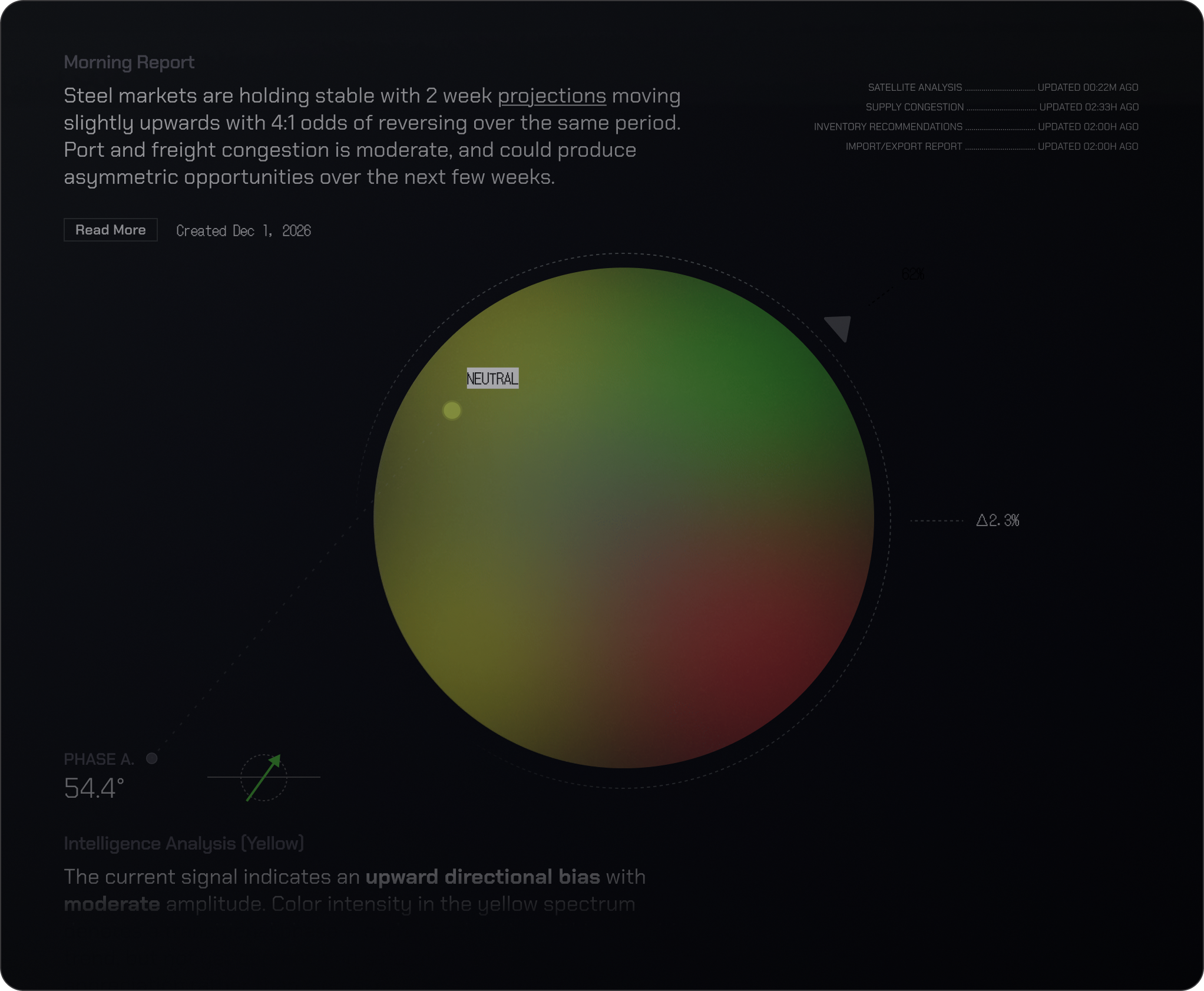
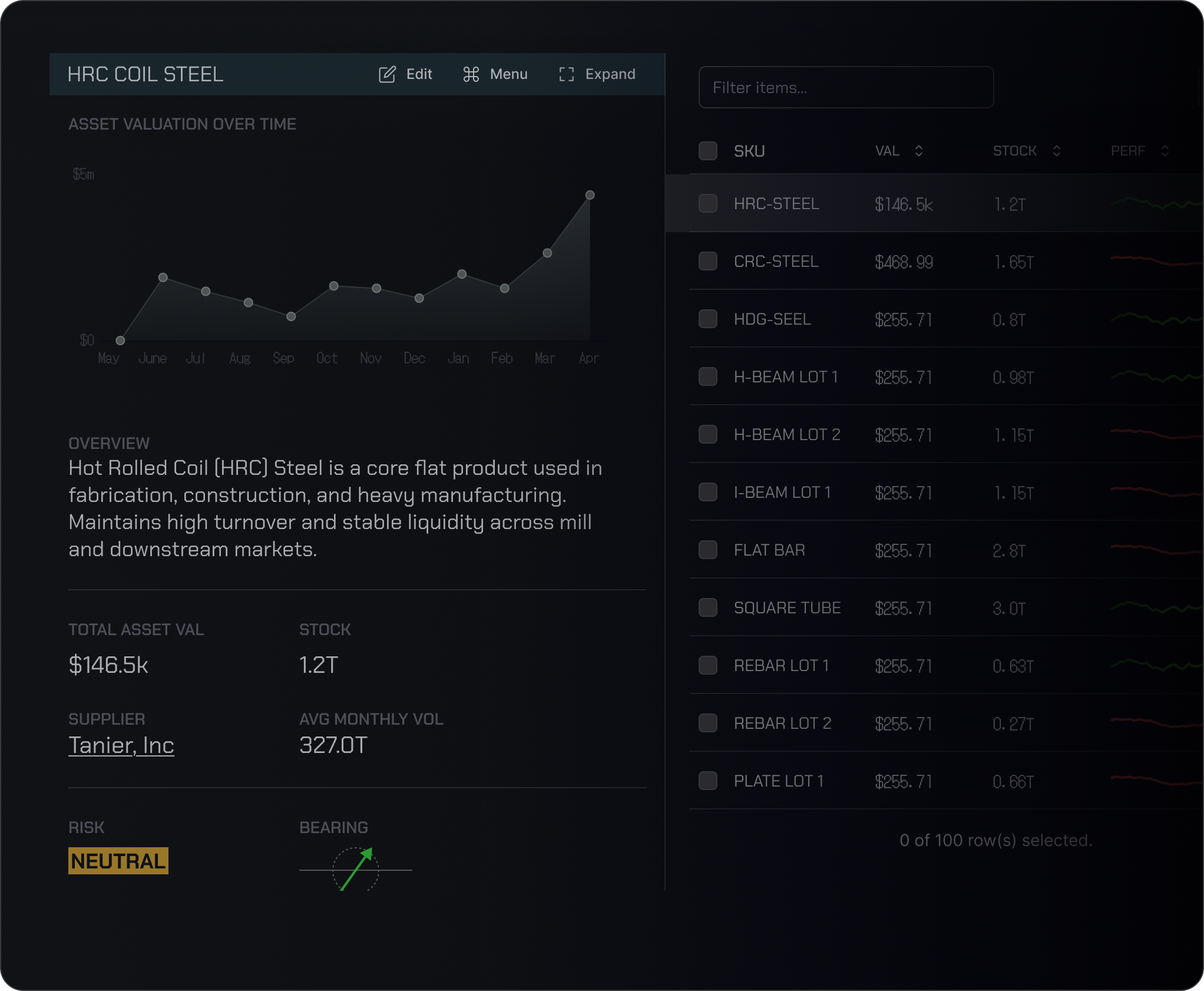
Exchange is the marketplace surface inside Forge. It connects distributors, buyers, and mills into one routable layer for product discovery, supply-demand visibility, and order fulfillment.
Exchange is the first system inside Forge that operators interact with on day one. It is the engine that connects distributors and buyers globally, surfaces fragmented supply into a discoverable surface, and turns every listing into a routable, observable asset. This note introduces what Exchange does, how its mechanics work, and how distributors, buyers, and mills can use it in their daily operations.
What Exchange is
Exchange is the marketplace layer of Forge. It is not a directory, a CRM, or a procurement portal — it is an operating surface for the moments where supply and demand collide:
- A distributor publishes inventory as listings backed by a real asset, or as forward listings backed by a MESO-1 generated signal.
- A buyer discovers, watches, and inquires against those listings, with full price history, supply and demand context, and provenance attached to every SKU.
- A mill participates upstream as the origination point — every lot it produces gets a heat code that flows into Provenance, anchoring the entire downstream chain.
Exchange is built on the premise that liquidity in industrial markets is not a function of more buyers — it is a function of fewer points of friction between the people who already need to transact.
How it works
Each surface in Exchange is a structured workflow, not a generic interface.
Listings. A listing is not 1-to-1 linked to a SKU. It is a container — a template tied to an asset category, which automatically filters all matching SKUs in the distributor's inventory. Price can be dynamically computed from real-time market signals or operator-specified. Listings can be edited, archived (removed from marketplace, retained as template), or deleted entirely.
Forward listings. A forward listing is a listing not backed by a realized asset, but by a MESO-1 generated signal. This lets distributors signal supply intent ahead of physical commitment, and gives buyers earlier visibility into what is about to enter the market.
Discovery. Buyers see recommendations driven by supply matching, fulfillment likelihood, buyer saturation at the distributor, and clearing match — a signal derived from the distributor's inventory risk metric:
Risk = p · r · (Δt / 365)
where p is current price, r is annual holding-cost rate (15–30%), and Δt is days held. When a distributor's risk signal indicates pressure to clear and a buyer's intent indicates demand, Exchange aligns those incentives at matching time.
Inquiries. Buyers send templated inquiries with optional custom message, quantity, and price range. Distributors can configure inquiry handlers that automatically score incoming inquiries against their inventory, price history, and current demand — sending positive responses above threshold and queuing negative ones for manual review.
Order tracking. Until Exchange ships its native transaction layer, order tracking is a structured manual surface. When a buyer commits, the distributor marks the SKU out of inventory, which reserves the asset, opens a tracking record with delivery and payment dates, and creates a pending Provenance ledger entry. A fulfillment health score is maintained automatically, estimating late-arrival, failed-fulfillment, and supply-chain risk. On arrival, the buyer closes the tracking record — which commits the Provenance transfer.
How operators use Exchange daily
For a distributor, Exchange is the surface where:
- New inventory becomes discoverable in seconds via listing templates
- Listing view, profile view, and follower analytics inform what to surface next
- Conversion rate and growth metrics roll up into the daily intelligence brief
- Inquiry handlers auto-respond to high-fit buyers without sales overhead
- Inventory pressure (risk metric) gets matched against active buyer demand at routable timing
For a buyer, Exchange is the surface where:
- Distributor recommendations are scored against actual purchase history and fulfillment likelihood
- Watchlists notify on price changes, archiving, low inventory, or demand spikes
- Provenance ledger is visible at the SKU level before any inquiry is sent
- Communication preferences (email-only, dm-only, hybrid) fit the existing relationship model
For a mill, Exchange is the upstream anchor. Heat codes assigned at origination flow downstream into every Provenance ledger that touches the lot.
Why it matters
Every other system in Forge — Mission Control, Citadel, Converse, Research, Provenance — assumes a market surface beneath it that is observable and routable. Exchange is that surface. It is the layer where signal becomes commitment, where intelligence becomes margin, where a fragmented industrial market becomes a single operable liquidity pool.
Exchange is now in early access for select steel distributors and buyers. Request access at /access/request to participate in the initial deployment cohort.